Category: Political storytelling
Jane’s Walk | Water and time
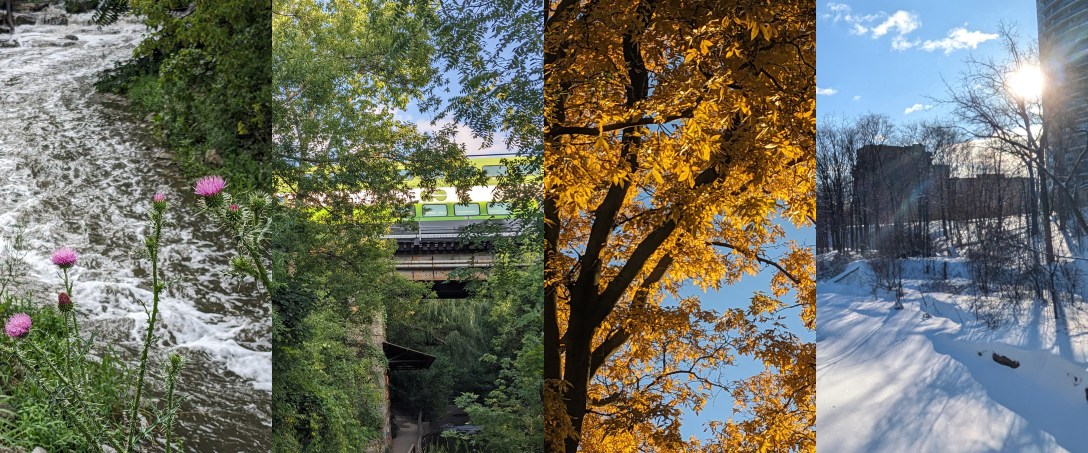
Cooksville Creek, from microseasons to this millennium
Sunday, 4 May 2025 | 2:00 p.m. | John C. Price Playground to oldest(??) black walnut in City Centre
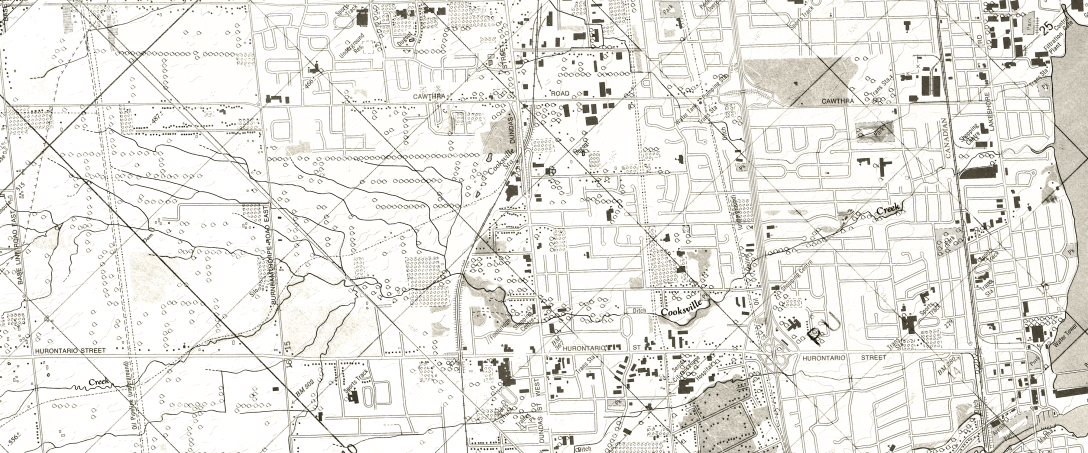
Let’s take a walk along Mississauga’s Cooksville Creek, as an exercise in traveling deep, and not far—across both time and space.
Let’s have conversations about what brings us—people, peoples, and place; humans and nonhumans; ancestors and future kin—together; about portals to an alternate, actually-existing Mississauga; about inhabiting a place; and about water.
Continue reading “Jane’s Walk | Water and time”Le Guin: piling talata
Le Guin: selected passages
Paminsanang pagsasalin / Occasional translations, no. 1
Sa sandaling matutunan mo ang managinip nang lubusang gising,
na ibalanse ang kamalayan hindi sa talim ng pangangatwiran
ngunit sa dobleng katig ng katwiran at panaginip;
sa sandaling matutunan mo ito,
mabibitawan mo lamang ito sa oras na mabitawan mo
kung paano magisip.
Ursula K. Le Guin, Ang Ngalan ng Sanlibutan Ay Gubat
Once you have learned to do your dreaming wide awake,
to balance your sanity not on the razor’s edge of reason
but on the double support, the fine balance, of reason and dream;
once you have learned that,
you cannot unlearn it any more than you can unlearn
to think.
Ursula K. Le Guin, The Word for World is Forest
At ang baylan at ang magdaragat ay hindi nalalayo;
kapwang naghahabi ng kapangyarihan ng langit at laot,
hinihubog ang hangin sa habi at haplos at hawak,
nilalayag papalapit kung ano ang dating malayo.
Ursula K. Le Guin, Ang Pinakamalayong Baybayin
“And mage and sailor are not so far apart;
both work with the powers of sky and sea,
and bend great winds to the uses of their hands,
bringing near what was remote.”
Ursula K. Le Guin, The Farthest Shore
Measuring the Manila square meter

This essay originally appeared in the catalogue for the exhibition titled “Living Spaces: Hyperreal Estate and the Architecture of Dispossession“, curated by Alice Sarmiento. I wrote it in conversation with, and with thanks to, Alice Sarmiento, Andre Ortega, and Maria Khristine Alvarez.
Consider the average Manila billboard.
It is many times larger than the average Manila home. Perched above Manila’s hypertensive roads, it gets better breeze, sunlight, and sight lines than the average Manila home; its floodlights consume more power than several average Manila homes.
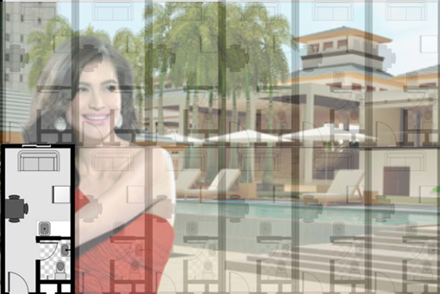
The visuals of the average Manila billboard are also larger than the average Manila life—especially when they peddle condominiums, those new average Manila homes for the 21st century. They feature models with impossibly white, impossibly smooth skins, living impossibly carefree lives of minutes-away convenience from the best that the city can offer, all under impossibly blue skies.
From a messaging point of view, the average Manila billboard needs to be larger than life. It must, after all, be heard above the jostle of shoulders, the knots in our backs, and the blare of last night’s death toll—all before we heave and lurch our way onto the next billboard.
It then needs to tell, within the limits set by 216 square meters,[1] convincing lies: small lies, about the life of grandeur possible within an eighteen square-meter unit,[2] about how the baked air takes your breath away, or about the mysterious dues and fees that await.
 Kenneth Cardenas