Evicting slums, ‘building back better’

Resiliency revanchism and disaster risk management in Manila

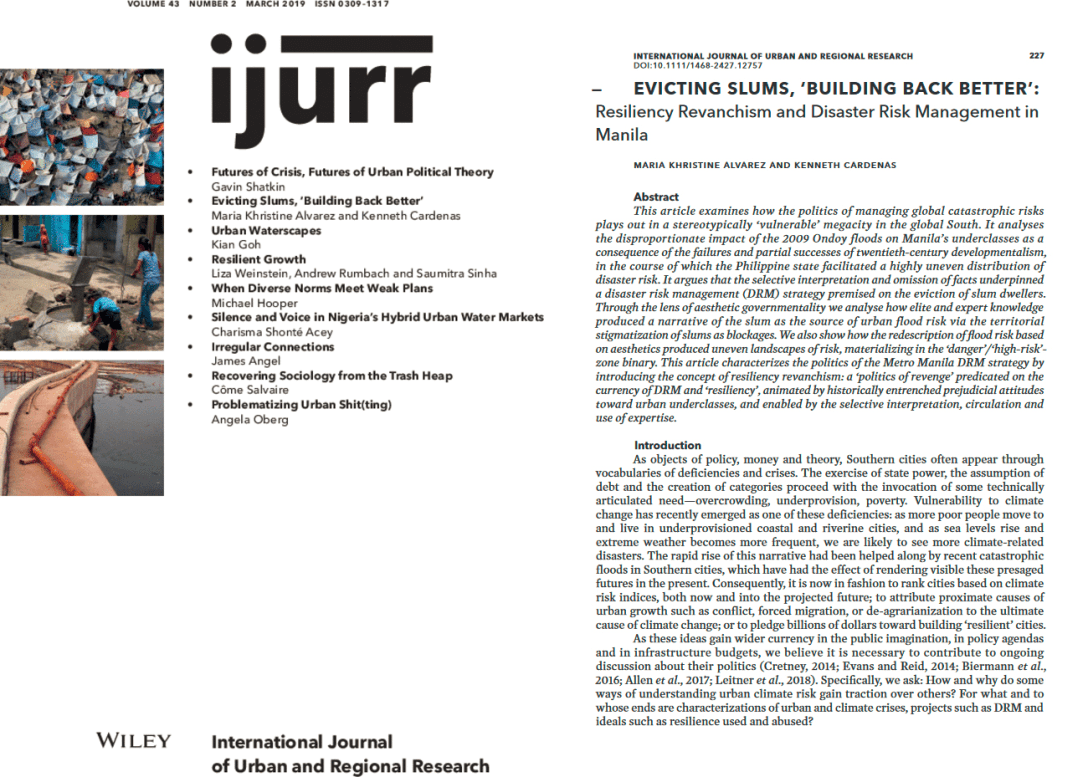
This article examines how the politics of managing global catastrophic risks plays out in a stereotypically ‘vulnerable’ megacity in the global South. It analyses the disproportionate impact of the 2009 Ondoy floods on Manila’s underclasses as a consequence of the failures and partial successes of twentieth-century developmentalism, in the course of which the Philippine state facilitated a highly uneven distribution of disaster risk. It argues that the selective interpretation and omission of facts underpinned a disaster risk management (DRM) strategy premised on the eviction of slum dwellers. Through the lens of aesthetic governmentality we analyse how elite and expert knowledge produced a narrative of the slum as the source of urban flood risk via the territorial stigmatization of slums as blockages. We also show how the redescription of flood risk based on aesthetics produced uneven landscapes of risk, materializing in the ‘danger’/‘high-risk’-zone binary. This article characterizes the politics of the Metro Manila DRM strategy by introducing the concept of resiliency revanchism: a ‘politics of revenge’ predicated on the currency of DRM and ‘resiliency’, animated by historically entrenched prejudicial attitudes toward urban underclasses, and enabled by the selective interpretation, circulation and use of expertise.

This article, co-written with Maria Khristine Alvarez, appeared as part of a symposium on the politics of flooding in Asian megacities, edited by Gavin Shatkin on the International Journal of Urban and Regional Research.

Read the full article here.

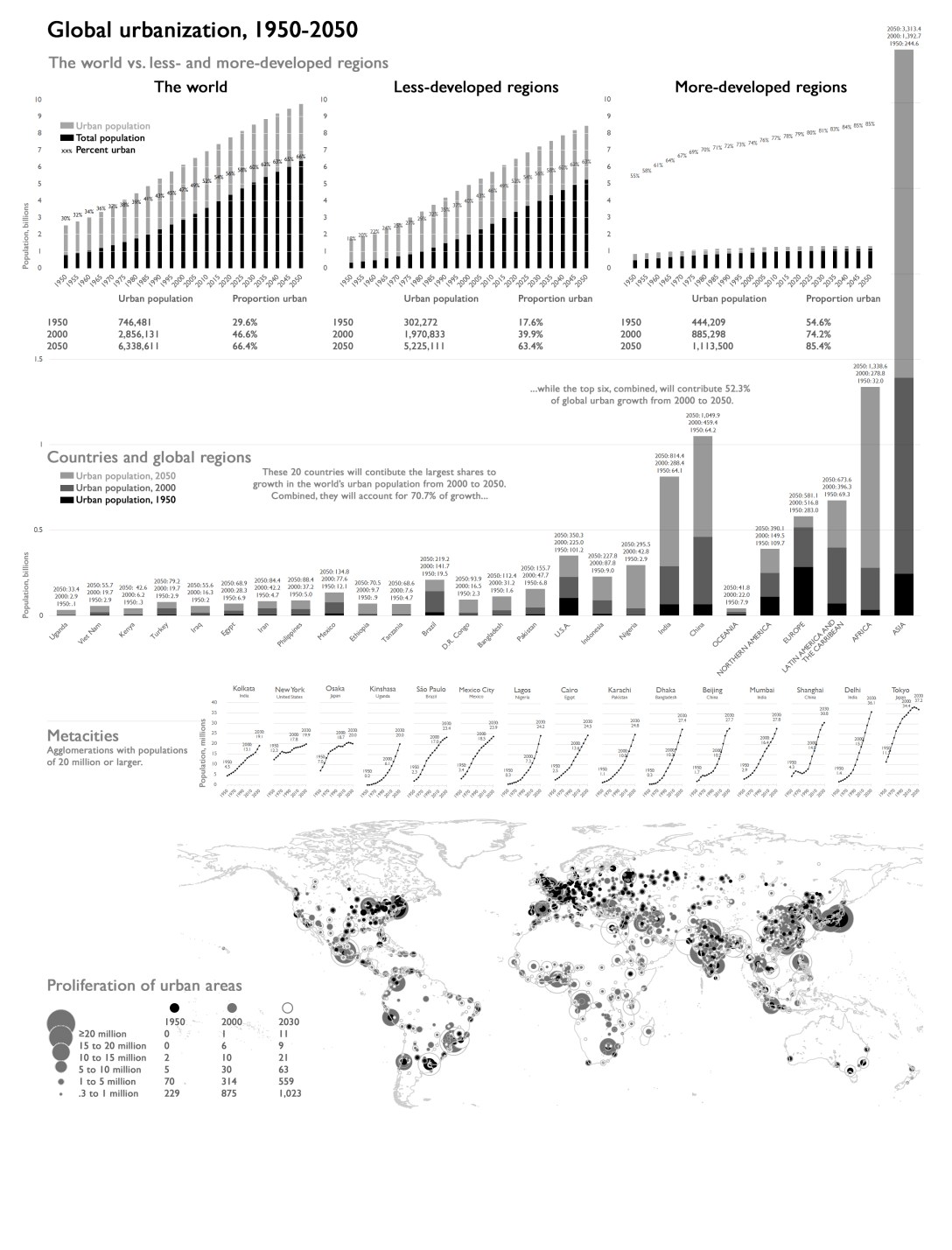
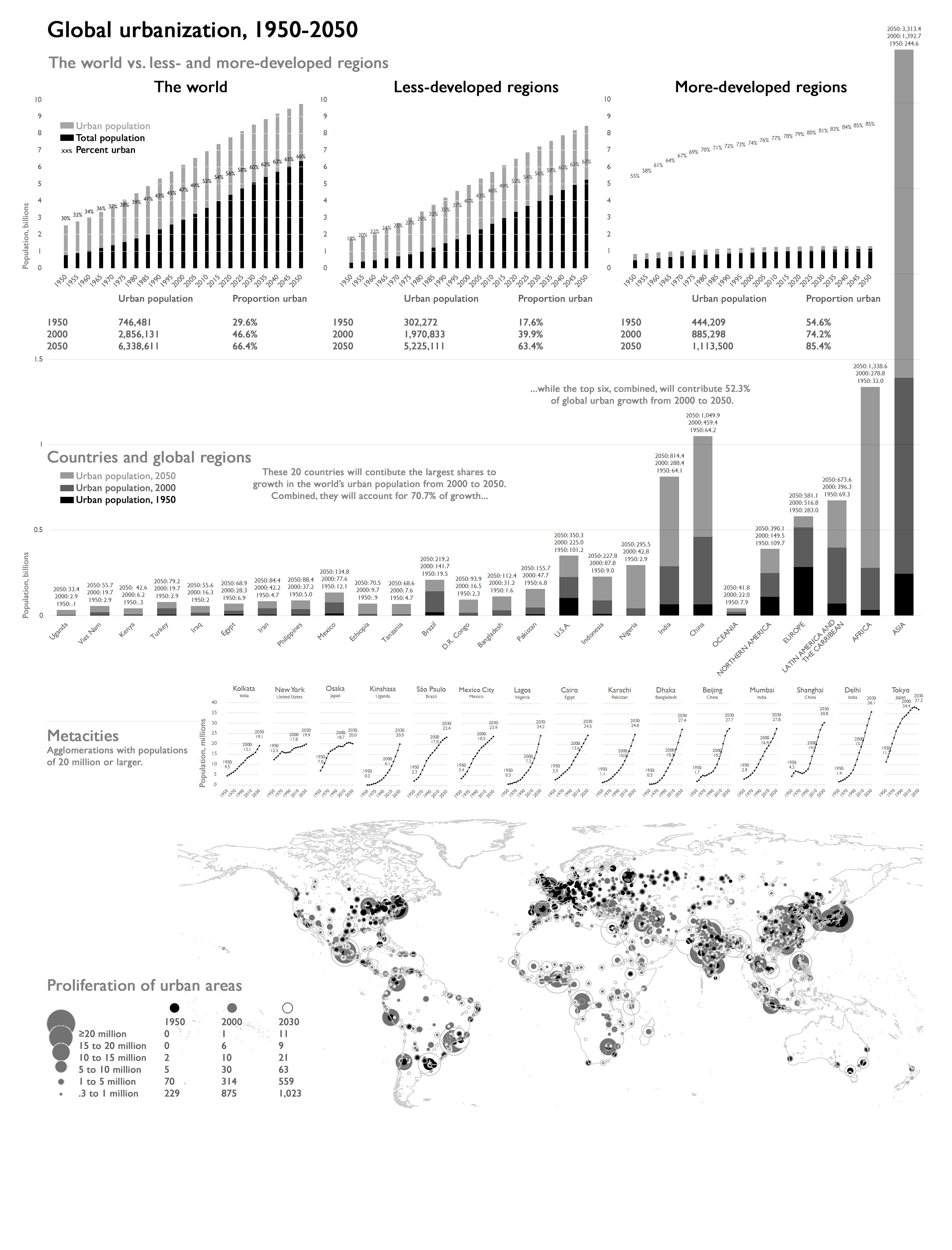
Global urbanization, 1950-2050

A version of this graphic saw use in Cardenas, K. and Kelly, P.F. “Shifting Urban Contours: Understanding a World of Growing and Shrinking Cities.” in A. Bain and L. Peake (eds.) (2017). Urbanization in a Global Context: Canadian Perspectives. Oxford: Oxford University Press.

dashboard

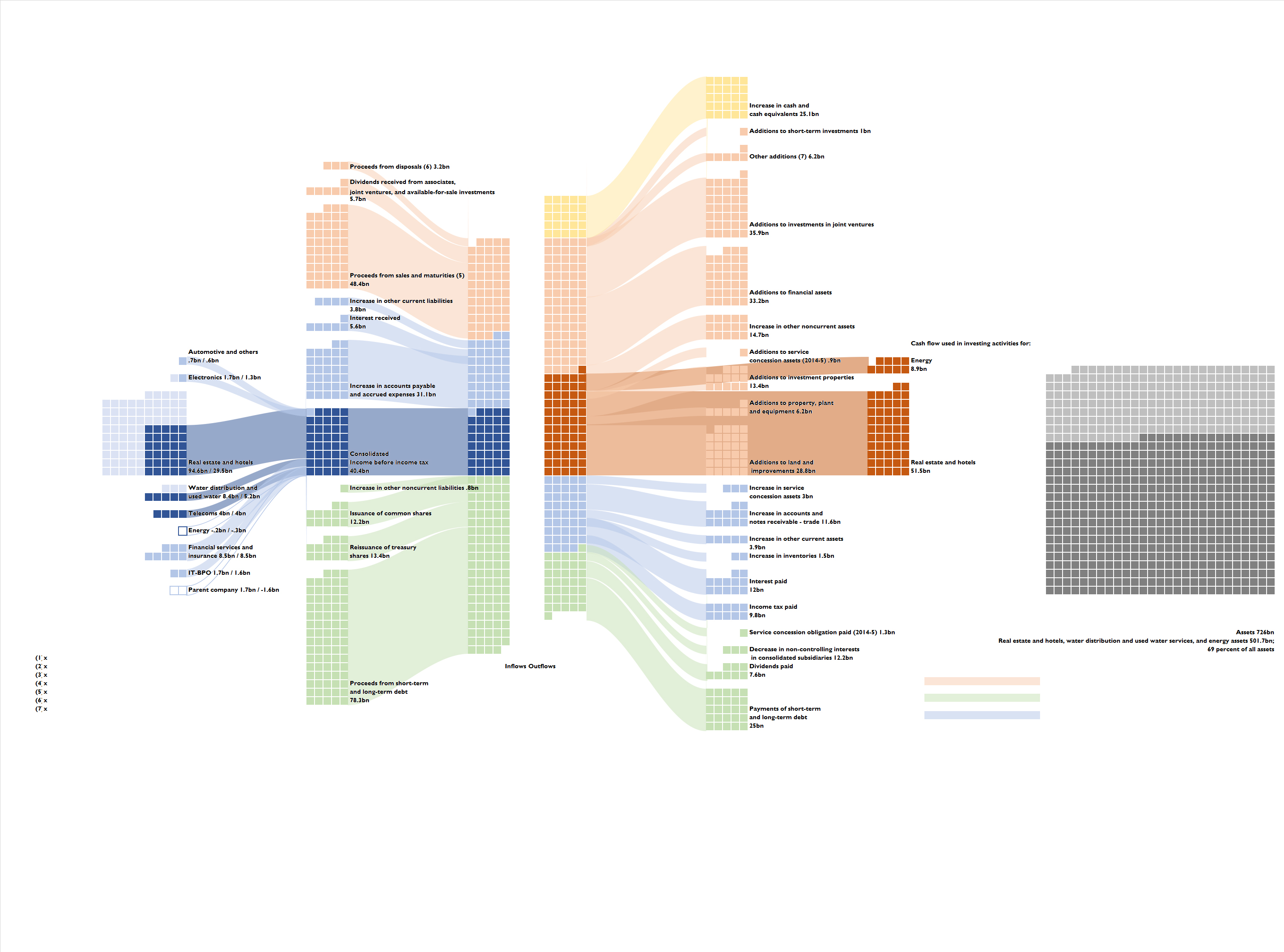
Duterte’s China deals, dissected

As part of Philippine Center for Investigative Journalism’s special report on Duterte’s China romance, I conducted research into the firms that signed deals during his state visit. What I found was that, among the Philippine parties to these deals include:

• firms with no track record in major infrastructure projects, no recent operating profit, and alarmingly small asset bases;
• firms and personalities that have been implicated in anomalous deals, including Arroyo-era “bridges to nowhere” and the Smokey Mountain Rehabilitation Project; and
• two firms involved in the nickel ore trade with China, one of which had been implicated in smuggling cases at Subic.

How did virtually unknown firms with no track record in bidding for—much less completing—major infrastructure projects, rise to billion-dollar prominence with the change of the administration?

For the firms that have no records with the SEC: if they aren’t registered to do business in the Philippines, how could they be party to billion-dollar deals on our behalf? For freshly-registered firms how were their directors able to both anticipate Duterte’s turn to China, and secure influence with the new government so quickly?

Given the ambitious scope of these projects, can the smaller firms, some of which appear to be seriously undercapitalized, be trusted to deliver on time and within budget? Would any sensible lender take the risk of extending credit to these firms—or will their access to capital depend on intercession from on high?”

Read the full story: Duterte’s China deals, dissected.

Other stories in this series, “Romancing China under DU30”: