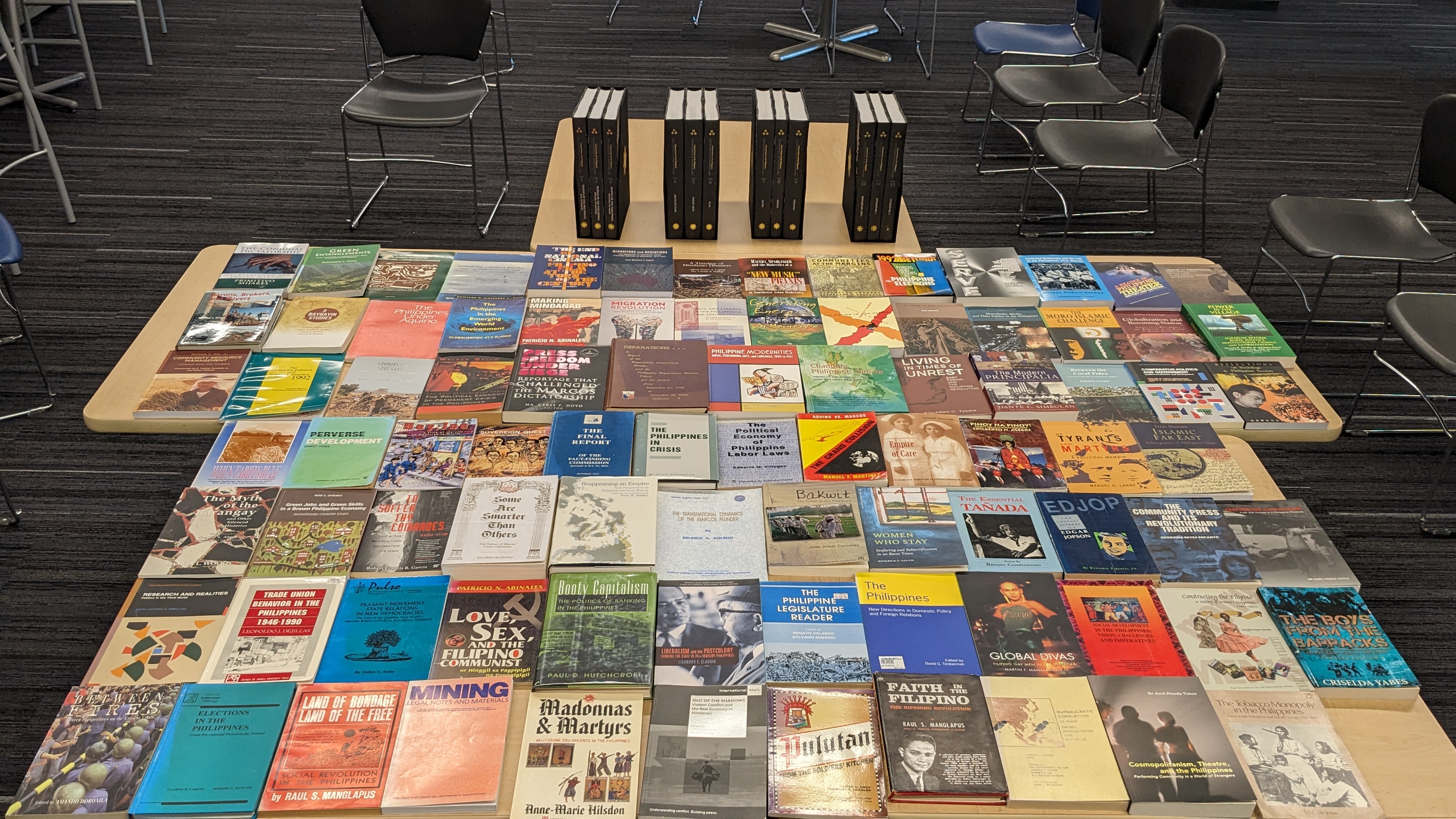
For the Filipiniana collection development project of the Philippine Studies Group at York University, I coordinated the acquisition of 108 titles for donation to York University Libraries. This project was part of a grant from the Philippine government to enhance academic and research collaborations between York and Philippine universities.
A full list of titles acquired is available here. YCAR’s press release here.
We focused on titles that fell outside YUL’s usual acquisition channels: titles older than five years, from presses without Canadian distribution channels. Some highlights include 31 titles from the University of the Philippines Press, 11 from Ateneo de Manila University Press, and 5 from Anvil Publishing. We acquired a full set of the second edition of the Encyclopedia of Philippine Arts: its final print run before it shifted to an online-only model.
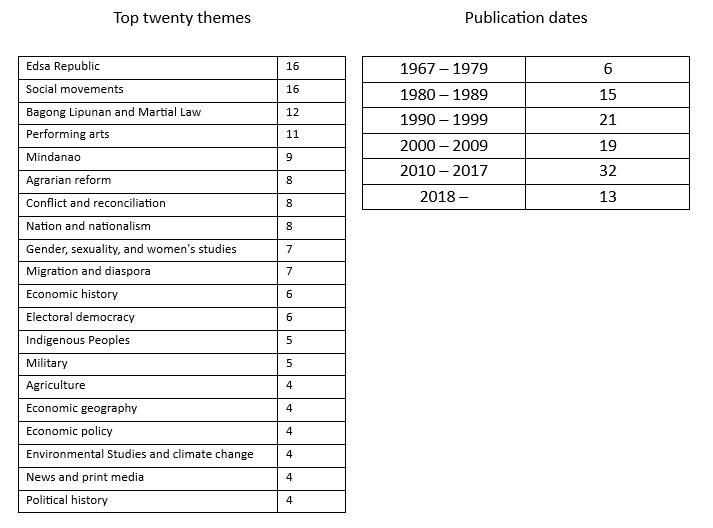
We sought to reflect the strengths and interests of York’s Philippine Studies community: performing arts, gender, sexuality, and women’s studies, economic history and geography, and environmental studies and climate change. We also tried to fill some gaps in York’s current collection with titles on social movements, Mindanao, and conflict and reconciliation.
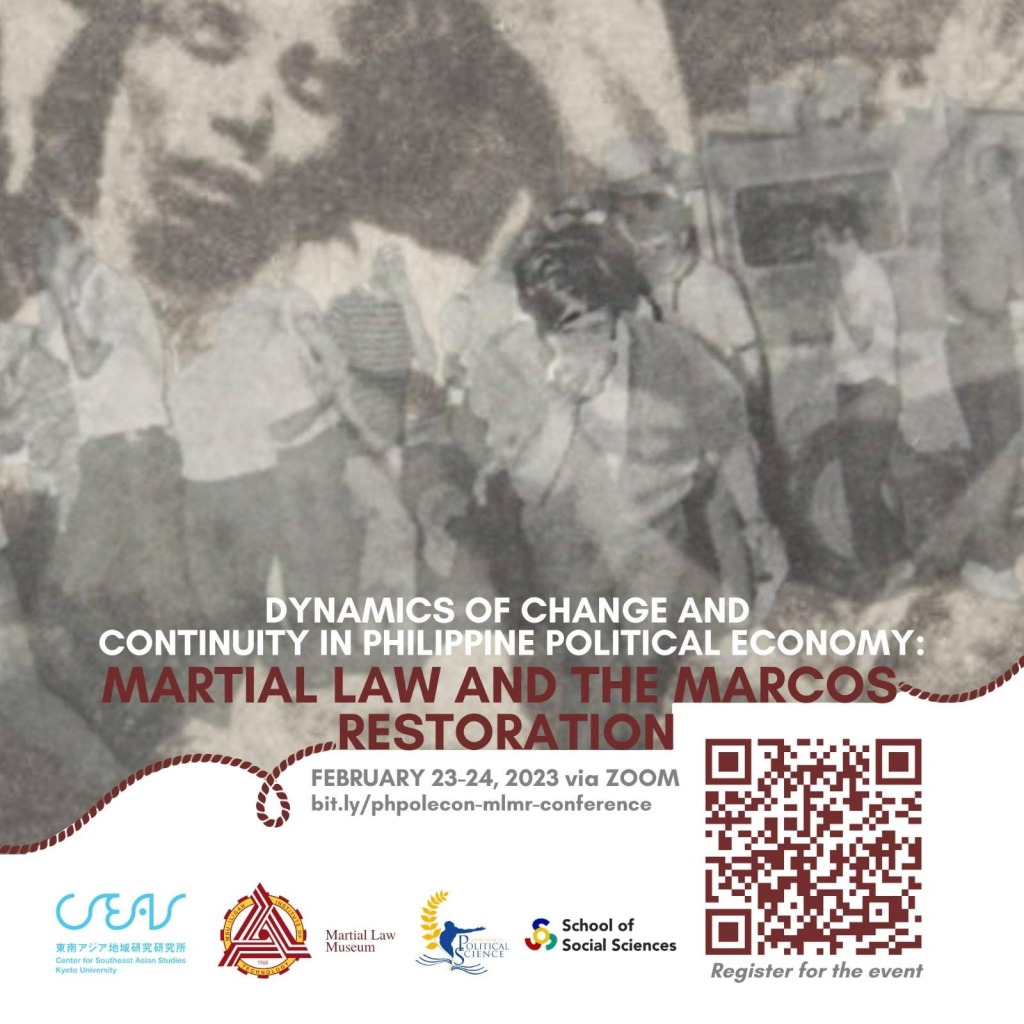
The Department of Sociology, Mindanao State University – Iligan Institute of Technology and Center for Southeast Asian Studies, Kyoto University are convenors of the conference. Other institutions such as the Ateneo de Manila School of Social Sciences, Martial Law Museum, and the University of the Philippines – Diliman’s Department of Political Science are also co-convenors.
Half a century after Ferdinand Marcos Sr. put the Philippines under the grip of authoritarian rule, his son is elected as the republic’s 17th president. The election of Ferdinand Marcos Jr. to the nation’s highest office, on the same year that the 50th anniversary of Martial Law is being commemorated, heralds a turning point in Philippine history necessitating a critical reassessment of the country’s darkest years in the 20th century. What has the historic authoritarian turn, embodied by the enactment of Martial Law, meant for the political economy of development in the Philippines? This question gathers particular significance as the return of a Marcos to national power fuels fears of historical revisionism, particularly in the portrayal of touted achievements of Marcos Sr. The deployment of political economy lens in assessing the consequences of Martial Law also enriches contemporary debates on industrialization, sustainable development, neoliberalism and global market integration, and inclusive growth.

 Kenneth Cardenas