Filipiniana collection development at York University, 2023–2024

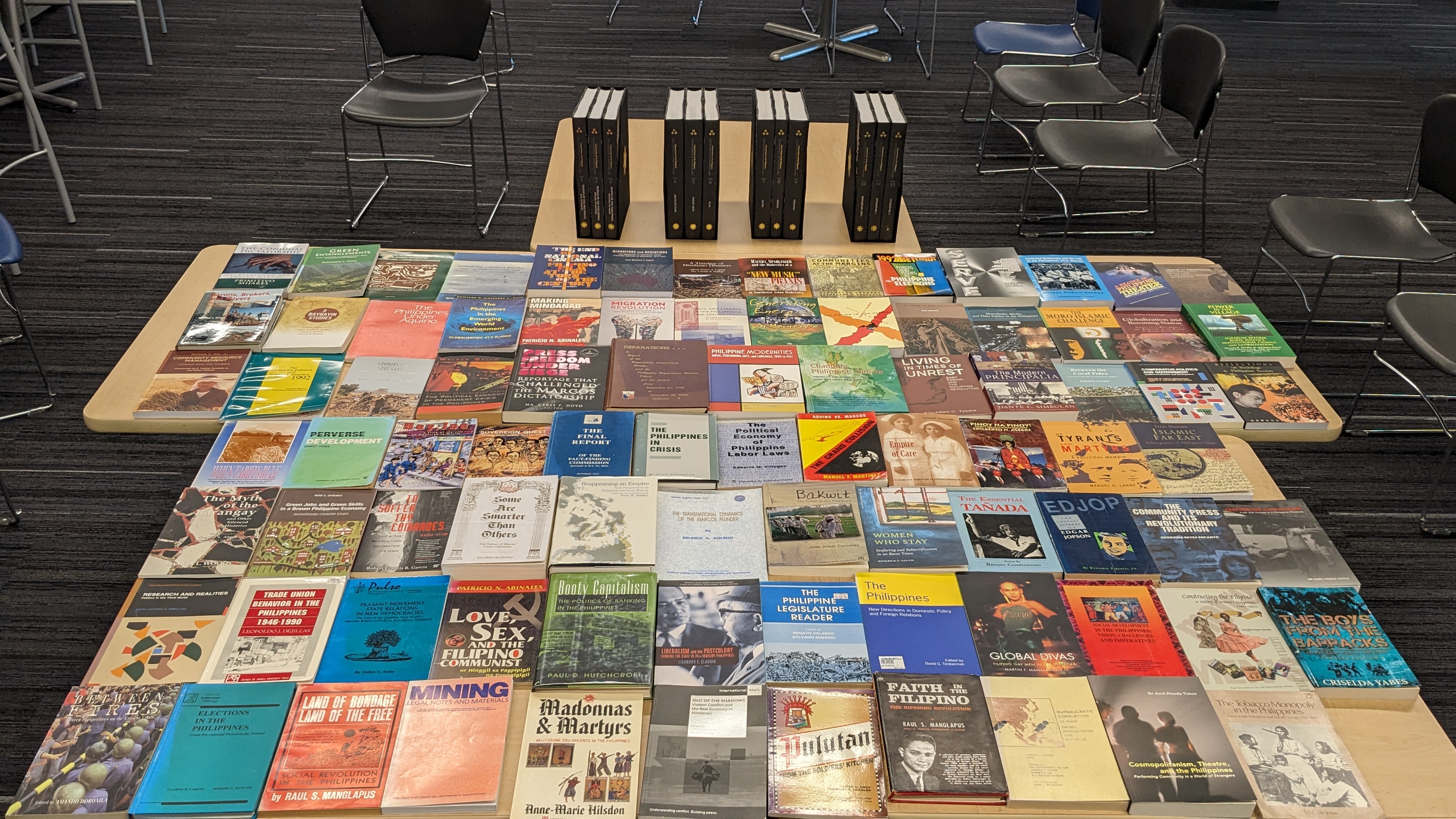
For the Filipiniana collection development project of the Philippine Studies Group at York University, I coordinated the acquisition of 108 titles for donation to York University Libraries. This project was part of a grant from the Philippine government to enhance academic and research collaborations between York and Philippine universities.

Update, 4 March 2025: read the final report here.

A full list of titles acquired is available here. YCAR’s press release here.

We focused on titles that fell outside YUL’s usual acquisition channels: titles older than five years, from presses without Canadian distribution channels. Some highlights include 31 titles from the University of the Philippines Press, 11 from Ateneo de Manila University Press, and 5 from Anvil Publishing. We acquired a full set of the second edition of the Encyclopedia of Philippine Arts: its final print run before it shifted to an online-only model.

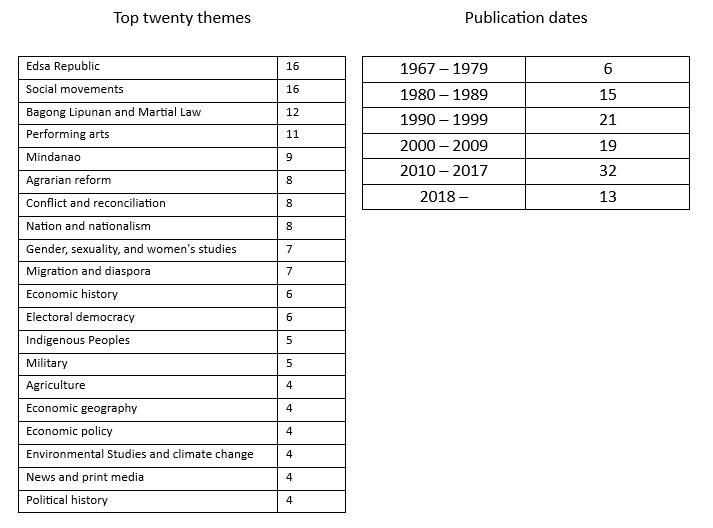
We sought to reflect the strengths and interests of York’s Philippine Studies community: performing arts, gender, sexuality, and women’s studies, economic history and geography, and environmental studies and climate change. We also tried to fill some gaps in York’s current collection with titles on social movements, Mindanao, and conflict and reconciliation.
Continue reading “Filipiniana collection development at York University, 2023–2024”

Countermapping v. epistemicide:

On the limits of neoliberalism, financialization, and gentrification

I will be presenting this paper at the Counter-mapping the City International Virtual Conference, organized by the Counter-Mapping PH Network, on 15 March 2022.

Critical urban scholarship has an unstated canon. The core concepts of this canon had been developed in response to North/Western experiences by North/Western experts, have been circulated and universalized through knowledge practices with roots in Empire, and now exert a distortive influence on scholarship from and on, the global South.

In this paper I propose an epistemic sense of “countermapping”: naming the ways mundane practices of critical urban scholarship reinscribe the cartographic practices of Empire, and showing how key features of present landscapes of class power and dispossession may be better described by explicitly Southern modes of knowing.

Enclosed and deliberately-idled land is a persistent feature of urban Philippine landscapes. These are dispossessions: their presence means land is withdrawn from beneficial use, and they contribute to artificially-high land prices. 
Continue reading “Countermapping v. epistemicide:”